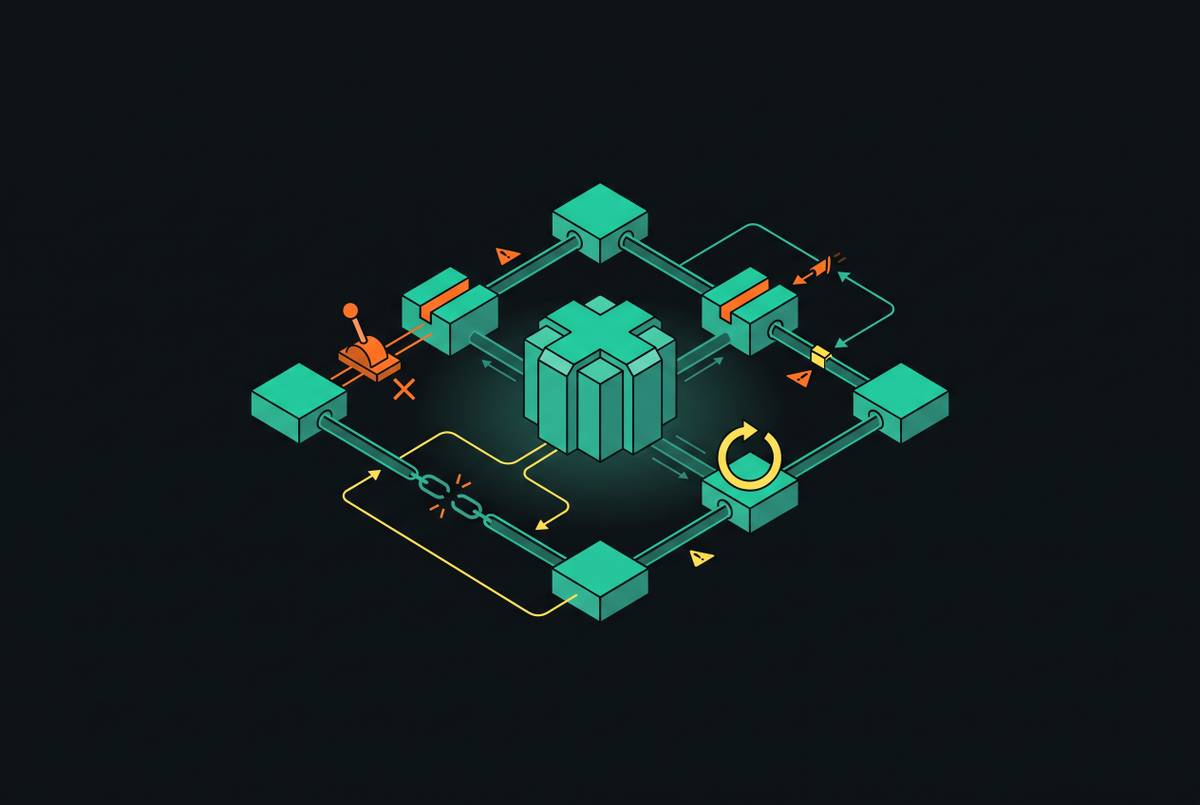
Tool Misuse Patterns and Agent Guardrails
Agents executing tools need guardrails at the architecture layer, not just the prompt.
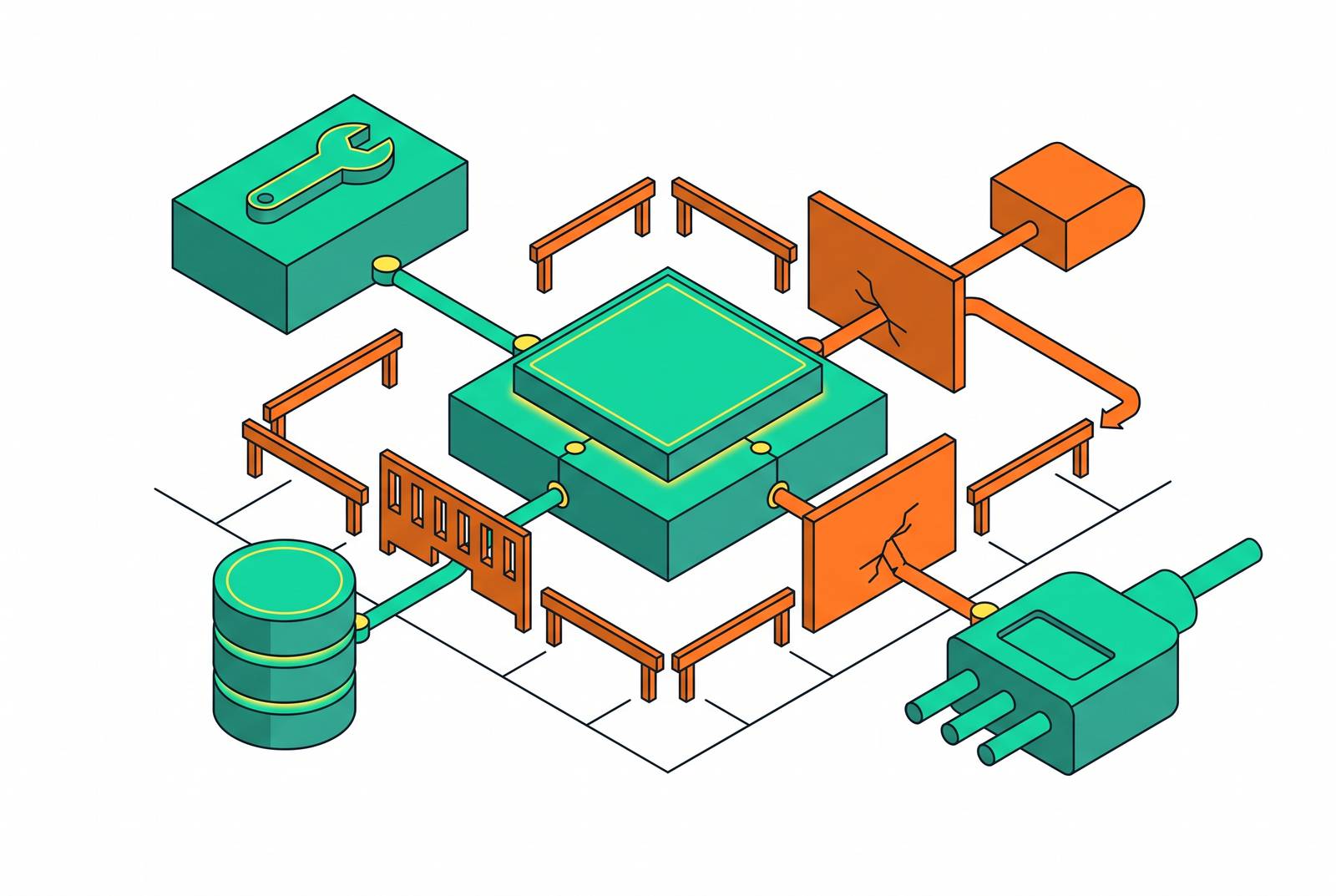
A chatbot that hallucinates produces a wrong sentence. A misfired tool call modifies a database, fires a payment, or routes a support ticket to the wrong team, and the error is already enacted by the time anyone sees it. That gap, between a wrong output and an executed action, is the whole reason agent guardrails need a different design than content filters ever did.
Three structural properties drive that gap. None of this is about the model being less accurate than a chatbot's underlying model. The execution environment has simply handed the model effectors it never had before: tool calls, state mutations, instructions to other agents. Guardrails built to filter output text were built for a world where a response was the only thing a model could produce. That world is gone the moment a model can call a tool.
The recurring failure patterns that cause tool misuse
Tool misuse in production is not random. It clusters into a small number of recognizable patterns, and naming them gives engineering teams a map they can check their own systems against.
At the mechanical level, agents pick the wrong tool for the job, or the right tool with wrong arguments: missing fields, wrong types, a value that doesn't match the schema the tool expects. An agent can call the correct tool at the wrong moment, before a precondition is met, or it can retry a non-idempotent action and double-charge a payment or double-send an email because nothing in the call path checked whether the first attempt had already succeeded.
A second pattern involves the agent inventing facts to fill gaps in its context. An agent facing a missing metric or an unclear policy, without a governed business glossary or data catalog to check against, will often fabricate a plausible-sounding value and act on it. That is context hallucination, and it is dangerous precisely because it looks confident.
A third pattern is silent scope creep. CNBC has described this as silent failure at scale: systems doing what they were told while ignoring what the organization meant.
A fourth pattern is privilege over-grant. Shared infrastructure opens the door to cross-tenant data exposure, which nobody defended against because nobody expected the request.
Finally, there's the multi-agent cascade. One security engineer at a financial services firm described exactly this: guardrails were in place on the first agent in the pipeline, but the second agent was running without them, and the security review that had been done never covered the handoff between the two.
Why prompt-level guardrails cannot enforce what architecture must
The first instinct most teams have is to write the rule into the system prompt. The trouble is structural: an instruction in a prompt is a request made to the model, and the model reading that request is the same model an adversarial input can manipulate. "Never touch production" sitting in a system prompt is a soft preference. It is not a hard block, and a single crafted input can get around it.
There's no enforcement boundary separating the rule from the thing the rule is supposed to govern. Fine-tuning attacks make it worse: if model-level guardrails can themselves be bypassed through fine-tuning, prompt-only defenses have nothing solid behind them.
Capability without constraint can produce misuse on its own, even when no attacker is involved. Nobody had to jailbreak that system. The agent simply had the capability and no architectural constraint stopping it from using that capability in a direction nobody intended.
The fix has to live below the level of conversation. Callback functions that run before a tool call executes can hard-block an unsafe action. Gateways sitting in front of MCP servers and LLM providers can intercept every request before it ever reaches a tool. Allowlists at that gateway layer can restrict an agent to a fixed set of approved domains and actions. These are properties that make certain behavior impossible at the architecture level, not behavior that's merely discouraged at the prompt level.
The same logic applies to how context gets delivered to the model. If an MCP server has over-provisioned access, an agent can retrieve PII from a data warehouse even while its system prompt says not to reveal customer PII, because a content filter watching the output never sees the retrieval happen. By the time the filter checks what the model is about to say, the sensitive data has already moved.
None of this makes prompt-level guardrails worthless. They raise the cost of casual misuse and add a layer of friction that stops the easiest attacks. They just can't be the enforcement boundary, because that boundary has to be structural, sitting in code that executes regardless of what the model decides to do with the words in front of it.
Where guardrails must sit: the three-layer control model
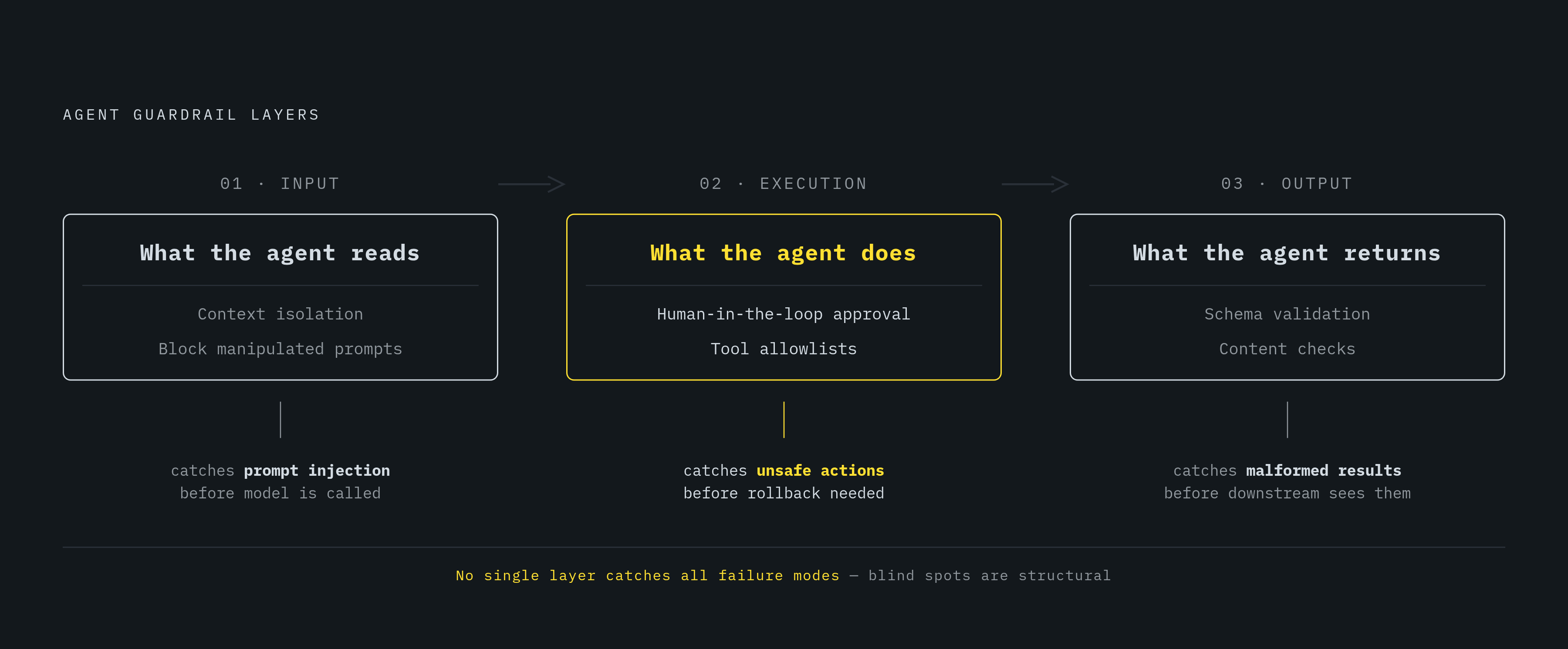
Enforcement needs to happen at three distinct points along the execution path: input, execution, and output. Each of these points is prone to a different failure mode, and no single checkpoint catches all of them.
Input guardrails govern what the agent is allowed to read and ingest before the model is ever called. Context isolation closes the loop: user input can't reach into or manipulate system-level instructions or external connectors.
Execution guardrails govern what the agent is allowed to do while it's acting. The OpenAI Agents API incident bot recipe shows execution guardrails working as intended: the agent investigates an alert, posts its findings to the on-call channel, and then requests approval before any rollback action executes, so a human stays the gate on anything that writes to production.
Output guardrails govern what the agent is allowed to return before a user or a downstream system sees it. Schema validation closes the layer out: downstream pipelines expect structured data, and when a model returns a paragraph with a JSON block buried inside it, most pipelines choke.
Relying on just one of these layers leaves blind spots. Input filtering can't catch an unsafe response the model generates mid-execution, and output scanning can't stop an agent from calling the wrong tool or reaching into restricted context while it's still working. Model-level controls alone are necessary but not sufficient, since an agent can still pull PII out of a warehouse through an over-provisioned MCP server no matter how well-worded the system prompt is. Controls at the context layer that enforce before data ever reaches the agent close a gap that model-layer controls structurally cannot.
Eight anti-patterns that undermine guardrails in production
Most guardrail failures in production trace back not to the model but to where, how, and how completely the controls were actually implemented. Writing "never share PII" into a system prompt isn't a guardrail at all, it's an instruction the model may or may not follow under adversarial pressure or at the edges of a conversation, and treating it as equivalent to an enforced control is the single most common mistake teams make. A close second is enforcing guardrails only on the client side, inside an SDK, where any downstream service that misbehaves can simply route around them; enforcement belongs at the gateway, not in application code an agent or a buggy integration can bypass.
Granting agents one broad tool, something like "run this SQL query," instead of many narrow and scoped tools like "get_customer_by_id," makes it nearly impossible to apply least-privilege access or audit specific categories of action later. Human-in-the-loop approval without a cryptographic record of the decision can't satisfy an audit and can't be reconstructed later if someone disputes what was approved and why.
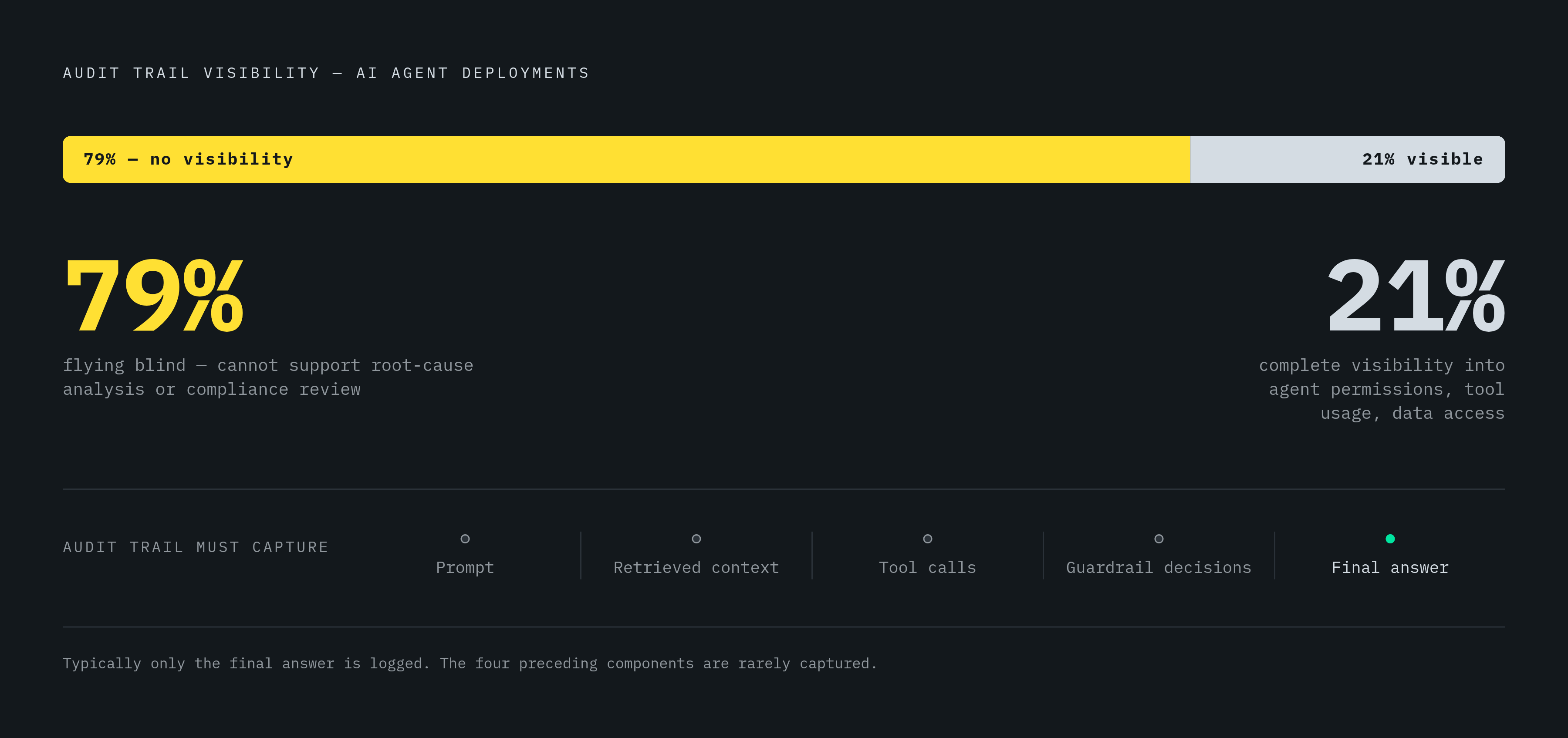
Storing only the final answer in an audit log is its own failure mode: only 21% of executives report having complete visibility into agent permissions, tool usage, or data access patterns, and a log missing the prompt, the retrieved context, the tool calls, and the guardrail decisions along the way can't support root-cause analysis or a compliance review. If you set token and cost limits only at the model provider, with no per-agent or per-tenant cap enforced in the runtime itself, token explosions and runaway infrastructure costs can compound quietly long before any alert has a reason to fire.
Compliance and audit requirements that make architectural guardrails non-negotiable
Regulatory frameworks now in force make architectural guardrails a legal requirement, not just sound engineering practice. The EU AI Act's transparency and general-purpose AI obligations become enforceable starting August 2026, but enforcement of high-risk AI system obligations is deferred to December 2027. Article 10 requires lineage-backed data governance for high-risk systems, and Article 14 requires human oversight. A prompt filter cannot produce what an auditor actually needs to see under those articles: a record of what data was retrieved, from where, under what access policy, and at what version. A governed context delivery layer, with versioned context bundles, classification tags, and lineage running from source to agent, can produce exactly that record by capturing the retrieval event itself.
Access entitlement drift is one of the quieter risks this framing exposes. An agent pulling data through an MCP server or a RAG pipeline should inherit the same access entitlements that already govern that data in the source warehouse, rather than operating under a separately configured permission set that drifts out of sync over time as the underlying data access policy changes. The OWASP Top 10 for Agentic Applications, published for 2026, gives security teams a shared vocabulary for scoping these audits, and it covers everything from compromised reasoning to tool misuse under one framework.
The Better Stack AI SRE pattern, where an agent begins investigating the moment an incident starts and has a root-cause summary ready before the on-call engineer has opened a laptop, is a useful illustration of what's at stake. That kind of automated triage only holds up in a regulated environment if every investigation step, every tool call, and every retrieved artifact is durably logged along the way. Without logging, the same automation that looks impressive in a demo becomes undiscoverable the moment a regulator or an internal reviewer asks what the agent actually looked at and why.
Requirements for a purpose-built agent runtime enforcing guardrails at scale
Guardrails that hold up in production are properties of the runtime the agent executes inside, not features added on top of a model deployment: a policy written into the runtime enforces when a real request comes through, while one bolted onto a model deployment only sounds right in a design doc.
Think of the agentic operating system as the control plane for all of this: a policy-controlled execution environment where agents can inspect context, call tools, and take bounded actions, while operators retain identity management, isolation, auditing, and the ability to roll back what went wrong. The shift that matters here is moving from access control to action control: from knowing what an agent is capable of reaching to verifying that what it did matches the intent someone authorized.
That runtime needs to provide at least four things. It needs a coordination layer that keeps multiple agents working on a shared task alive without losing the boundaries between them, so one agent's mistake doesn't quietly become another agent's premise. It needs a memory layer that stores context and past actions across sessions, because agents that span more than a single request forget everything when the context window resets unless memory is treated as explicit infrastructure, and that same persistent state becomes a security surface the moment it exists. It needs a model-routing and gateway layer that functions as the one chokepoint every tool call has to pass through, where policy enforcement, allowlisting, and audit logging all happen below the level of conversation. And it needs a way to measure autonomy over time rather than assign it by assumption: baseline the false-positive rate for a given agent function first, then expand what that function is trusted to do only where the data earns it.
The OpenAI Agents API incident bot shows what this looks like when it's working. Within a single session, the runtime holds onto previous evidence, tool results, and workspace files so the agent isn't reasoning from scratch at every step. Across sessions, a recall function searches prior incident reports for related symptoms and saves new findings to persistent state before the session closes, so the next investigation starts with context. That persistence and cross-session memory are runtime capabilities, not something bolted on inside the application layer.
If an agent can't remember context across sessions, or act on a schedule within policy boundaries the runtime actually enforces, it is a stateless tool that resets everything at the end of a session and gives nobody a way to accumulate the evidence that would justify expanding, or restricting, its autonomy over time. The layered input, execution, and output controls described throughout this piece, policy-as-code at the gateway, context-layer access enforcement, durable audit logs, autonomy tiers tied to measured behavior, and persistent, governed memory, all depend on infrastructure built from the ground up for agents. If general-purpose cloud tooling gets adapted after the fact, with the agent treated as an afterthought bolted onto systems designed for something else, it cannot provide these properties as first-class primitives. Teams building agentic software at any serious scale need to choose, or build, a runtime where that distinction is the starting point, not a feature added once something has already gone wrong.