Framework Internals That Reveal Whether Persistence and Scheduling Were Designed in or Glued On
Framework internals reveal whether persistence was architected or bolted on.
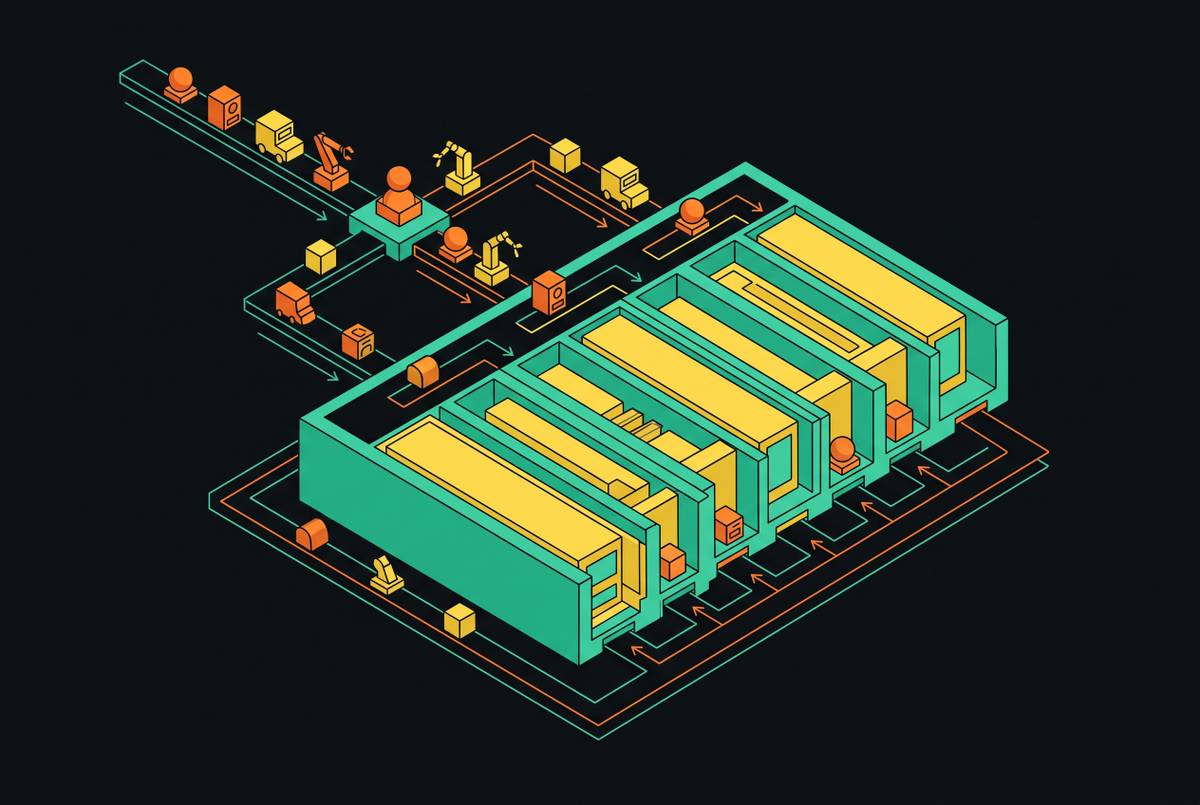
Persistent and scheduled autonomous agents that run at scale need a runtime that owns their durable history, isolated sessions, state-aware scheduling, and policy enforcement. Those components either shape the execution model or sit outside it as application code. The internals of a framework show that difference before a demo can, especially when work must survive restarts, delayed approvals, and changes in capacity.
Why persistence and scheduling are architectural questions, not feature questions
A five-step workflow meets a container restart and loses everything held only in the worker’s memory. Intermediate results disappear, and the next worker has no authoritative record of progress. Restarting the workflow may repeat completed actions. The failure begins before the restart, in the decision to make a running process the only place that knows what has happened.
That decision is invisible in a successful demo. Two frameworks can produce the same result while assigning responsibility for state to entirely different layers. One makes sessions and recovery platform primitives, while the other leaves developers to assemble them around the execution loop. The difference emerges when agents run for hours, wait overnight for approval, or coordinate across sub-agents. These conditions test the architecture.
The atomic unit becomes a session rather than a deployment, with context and lifecycle managed as part of execution. General-purpose application hosting can support agents, but its developer must supply those semantics if the platform does not. The runtime can be judged by who keeps track of the work when the process stops.
What the execution model's event log reveals about durable-state intent
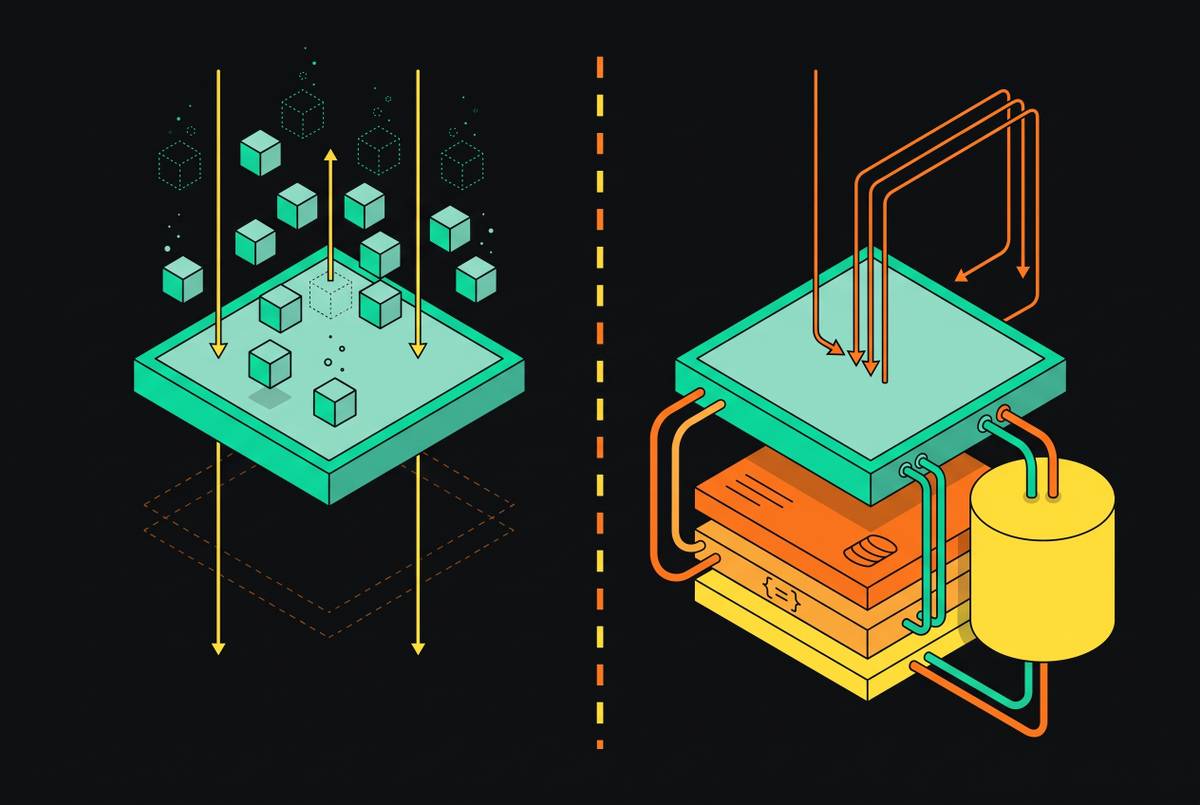
The first place to look is the event log. Does execution derive its state from that log, or does it append records after work has already happened? In the former design, typed state transitions enter durable history and in-memory state is reconstructed from it. In the latter, a failed write or a process death between an action and its record can leave stored history out of step with execution.
The 2026 agent harness blueprint recommends an append-only event log plus a typed state snapshot for session history. Its stated reasons include cache stability, replay, auditability, and deterministic recovery. The snapshot and log serve different purposes. A checkpoint records what the state was, while an event log records how it got there. Periodic snapshots alone do not provide the transition history needed to recover between checkpoints without blindly repeating work.
This makes the log’s authority more revealing than its existence. An optional audit trail can describe a run without controlling recovery from that run. Always-On Agents: A Survey of Persistent Memory, State, and Governance in LLM Agents identifies rollback as the rarest capability in the literature it surveys. What authoritative history could the runtime actually return to?
How the session model exposes whether state isolation was designed in
The session model determines which interaction owns a record, how long that ownership lasts, and which other interactions can see it. A purpose-built runtime gives each session isolated compute, state, and an independent lifecycle. The session’s contents can vary with the task. For a coding agent, it may be a repository plus a conversation, while document processing may require a pipeline plus approval state.
Timeouts expose this boundary quickly. Synchronous HTTP infrastructure holds a connection open while the agent works, so raising the timeout only extends the same constraint. An asynchronous execution environment lets the session live on after the client connection ends. By the same logic, a session can persist across channels only when its identity is not tied to the transport.
A write may belong to a user, an agent instance, a session, or an organization. When the runtime models those scopes, retrieval can follow the same boundaries as execution. When it does not, developers must add filtering later. Saving a conversation is therefore not enough to establish that the platform has designed session isolation in.
What the state taxonomy reveals about which governance capabilities a framework can actually support
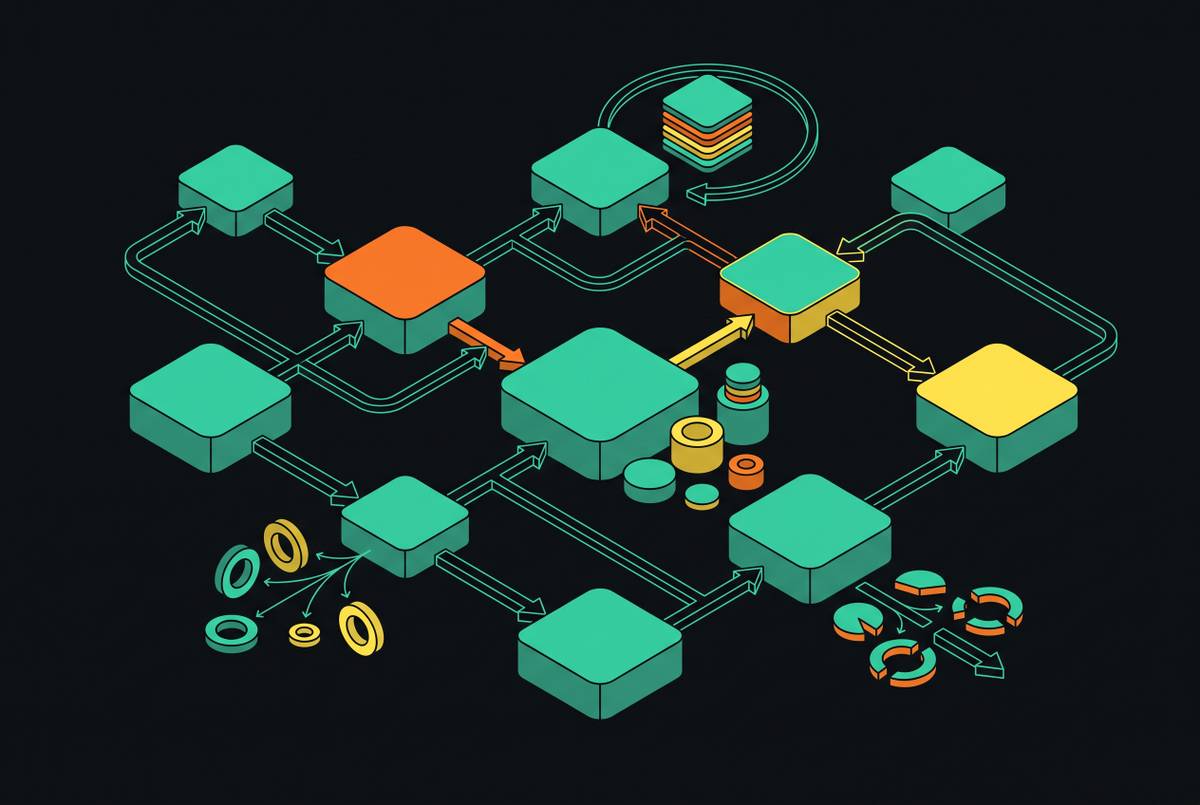
Episodic traces, semantic facts, preferences, and procedural skills describe memory, but they do not describe every obligation an agent creates. A task ledger records unfinished work, while permission state governs what work is allowed. Credential state, trigger state, provenance, audit records, shared memory, and external commitments have different roles again. A framework can govern those distinctions through its native state model only if that model has a way to represent them.
The always-on survey treats these as control-relevant state. It also finds that accumulating and retrieving state receive more attention than updating, forgetting, auditing, and rolling it back. This is an operability gap. An agent may retrieve context it needs yet have no way in its model to withdraw stale state or account for a commitment it has already made.
PwC’s A Contract-Centered Architecture for Scalable and Manageable Agentic Runtimes offers a concrete structural response. It defines Skill as bounded business semantics, Harness as runtime admission, composition, governance, and evidence capture, and Scaffold as the physical execution and control boundary. An external data substrate has its own responsibility contract. These boundaries separate what an agent does from how it is governed and where it runs. They also reflect the different change cadences of capability owners, platform teams, and SRE/governance teams, without making the model a vendor recommendation.
How can scheduled agents wake up with their past context intact?
A scheduler built into the execution model treats activation as a session lifecycle event. It knows which agent instance should wake and delivers the trigger into that instance’s existing state. The agent retains the reason for waking and the work awaiting it. A bare cron-triggered HTTP call leaves the application to reconstruct that connection from a separate store.
A human-approval pause is the decisive case. The session must remain suspended at a known checkpoint, with a durable signal able to resume it when approval arrives. Keeping a process asleep uses resources while it waits and can still hit a timeout, while dropping the continuation loses the point from which work should resume.
The blueprint recommends a durable state machine or graph runtime with checkpointing for the core runtime. It grounds that choice in pause/resume, replay, fault tolerance, and human interruption support. Those needs tie scheduling to the state of the session and the trigger. The diagnostic is therefore not simply whether a framework advertises scheduled jobs. It is whether time-driven activation enters the same durable lifecycle as every other continuation.
The working-memory substrate as a third structural signal
The event log records execution, and the session defines its scope. A third structural signal is where the agent keeps the material it is working on. If intermediate results, tool outputs, and plans live only in the context window, the model call becomes the practical container for work that may need to outlast it. External working memory changes that relationship. The context can hold references to the material kept in durable artifacts.
The blueprint recommends an artifact-first filesystem plus a metadata store for working memory. Its reasons include offloading context, preserving recoverability, and supporting handoffs and resumption. Under this design, a new worker can resume by mounting the same artifact store rather than rebuilding working material through the model’s history. By contrast, continually appending tool output to context eventually forces compaction. If that behavior was never part of the framework’s design, the developer must supply it.
Keeping artifact references stable can preserve a cache-stable prefix, while rebuilding context around raw output that has piled up can break that stability. The always-on survey identifies the context window as a heavily studied retrieval surface with gaps in recoverability and the return arc of state governance. Convenient access during a model call is not the same property as durable working memory.
How the governance and policy layer's placement reveals whether safety is a runtime responsibility or a prompt responsibility
Durable state makes work recoverable, but it does not decide whether that work should proceed. The placement of the policy engine reveals who makes that decision. If destructive actions, secret access, or external writes depend primarily on the model following instructions, enforcement rests on a probabilistic component. A runtime policy layer creates a different boundary. It checks the requested action before the tool executes, regardless of the model’s request.
The recommended placement is between the tool router and the tool itself. Every call goes through a deterministic allow/deny check, so the policy decision is enforced as the call runs. The blueprint states that the model should never be the only enforcement layer. This does not remove the role of prompt instructions.
If changing a prompt removes the guardrail, that guardrail is not enforced by the runtime. If a policy-engine configuration must change, enforcement has a separate control surface. That separation permits independent auditing and versioning across model upgrades.
What capability-capacity separability means for teams that need to change one without breaking the other
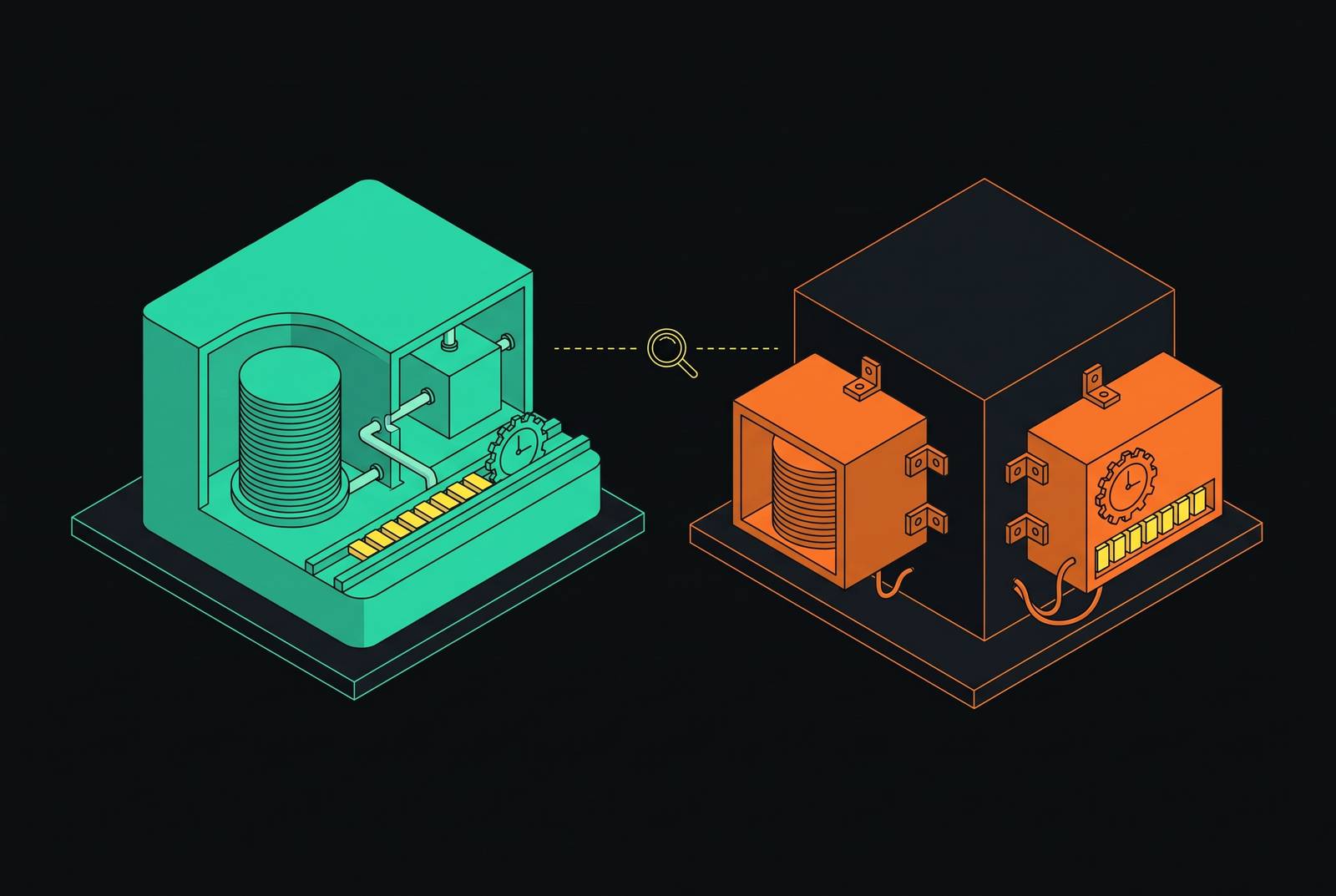
These internal boundaries have a shared operational purpose. They let teams change what an agent does without entangling that change with where and how it runs. The PwC paper calls this cost-aware capability-capacity separability. It tests whether compatible capacity changes keep semantic outcomes the same, while capability changes keep the capacity-response relationship within declared margins.
Task success alone cannot establish that separation. Nor can throughput and latency alone. The paper identifies ways the two dimensions can reconnect through shared state, resource-sensitive inputs, scheduler feedback, undeclared effects, or policy bypasses. Each can make a change that seems confined to one part of the system cross a responsibility boundary. Evaluating only one dimension leaves that interaction out of view.
A model upgrade may change tool-call patterns and reveal an assumption about the scheduler built into the execution loop. Adding workers may change state-write order and cause races, while changing an isolation zone may change which credentials are visible. These are possible examples of coupling. When state, scheduling, isolation, and governance are built in, the runtime has clear places to handle these problems. The intended boundary is that infrastructure problems belong to the runtime, while reasoning problems belong to the framework.
The five internal checks that distinguish designed-in from glued-on before writing any application code
The checks start with architecture documentation and source code, which show more than a successful demo. The first check is the event log’s authority. Look for durable, append-only typed transitions from which another worker can reconstruct state. A store updated merely as a side effect of execution does not establish that authority.
The second check is the session primitive. The session primitive requires isolated compute, isolated state, and a lifecycle independent of the request handler. Timeout behavior provides a fast proxy. A longer connection timeout does not give the session a durable life of its own.
The third check is state taxonomy breadth. Look for task ledgers, permissions, provenance, audit records, triggers, credentials, and external commitments alongside classical memory. These need distinct roles in the model. Otherwise, governance of them remains application work.
The fourth check is scheduler-session coupling. Look for a scheduler that knows session identity and delivers a trigger into existing state. Use an approval wait as the test. A durable continuation preserves the point of resumption, while a sleeping process merely postpones execution.
The fifth check is policy-engine placement. Look for a deterministic check before every tool call that works regardless of the model output. Prompt instructions alone do not pass this check. Enforcement needs a runtime control surface.
A purpose-built agent operating system fits the needs of teams that want these properties without having to rebuild them. The designation alone proves nothing. Its value lies in supplying these primitives as the foundation rather than leaving them for an application to retrofit. Once the execution model is established, adding them requires architectural reconstruction.