Enterprise AI Platform Orchestration Layers and Where Productivity Gains Actually Come From
Productivity comes from the system around the model, not the model.
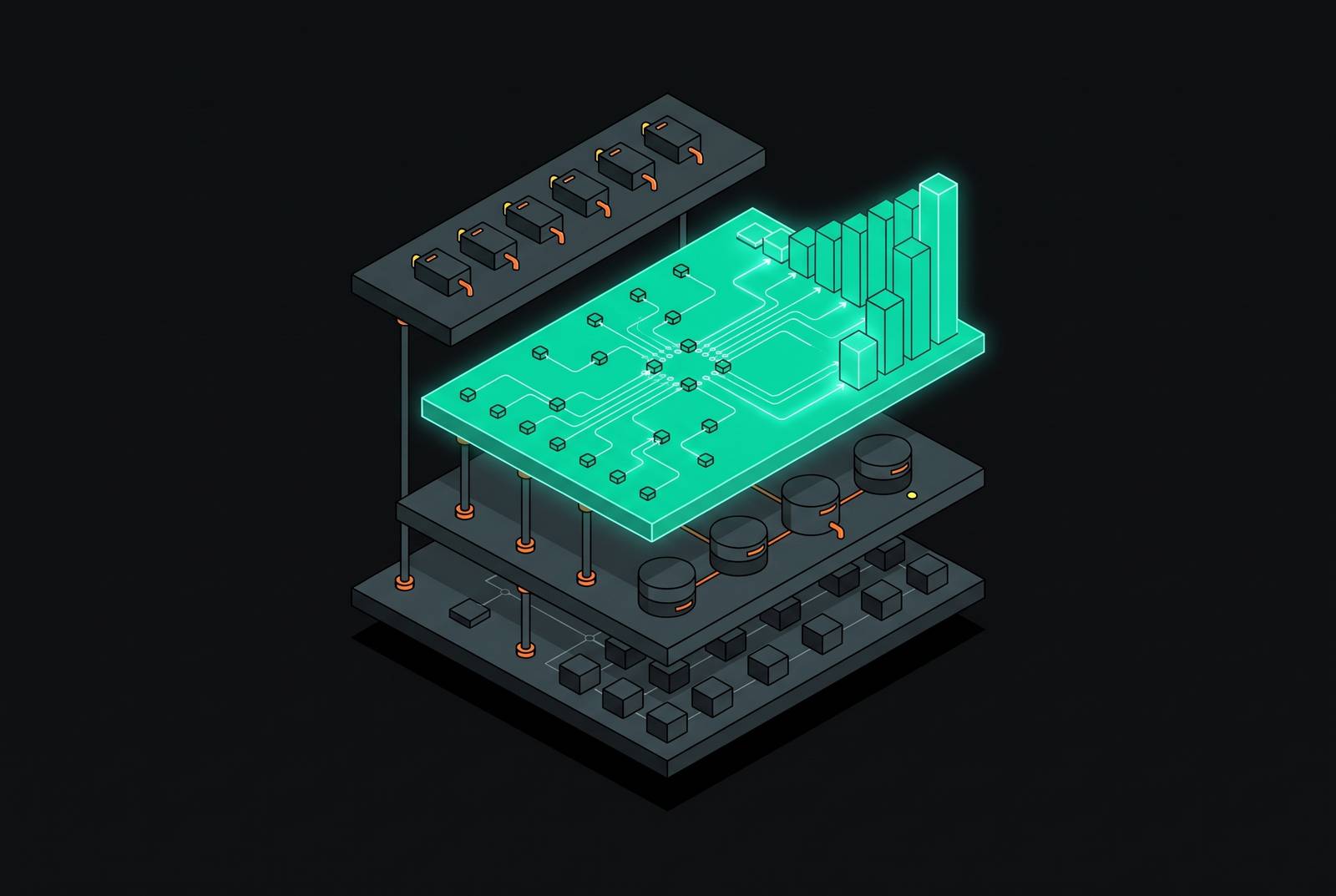
Business AI productivity depends less on which model a company deploys than on how its orchestration layer connects that model to real work. For multi-step workflows, the strongest platform is one that preserves context, coordinates tools, recovers from failures, and acts without constant prompting. A better model can help, but it cannot reliably compensate for a system that loses the thread.
Why enterprises keep chasing model upgrades but not closing the productivity gap
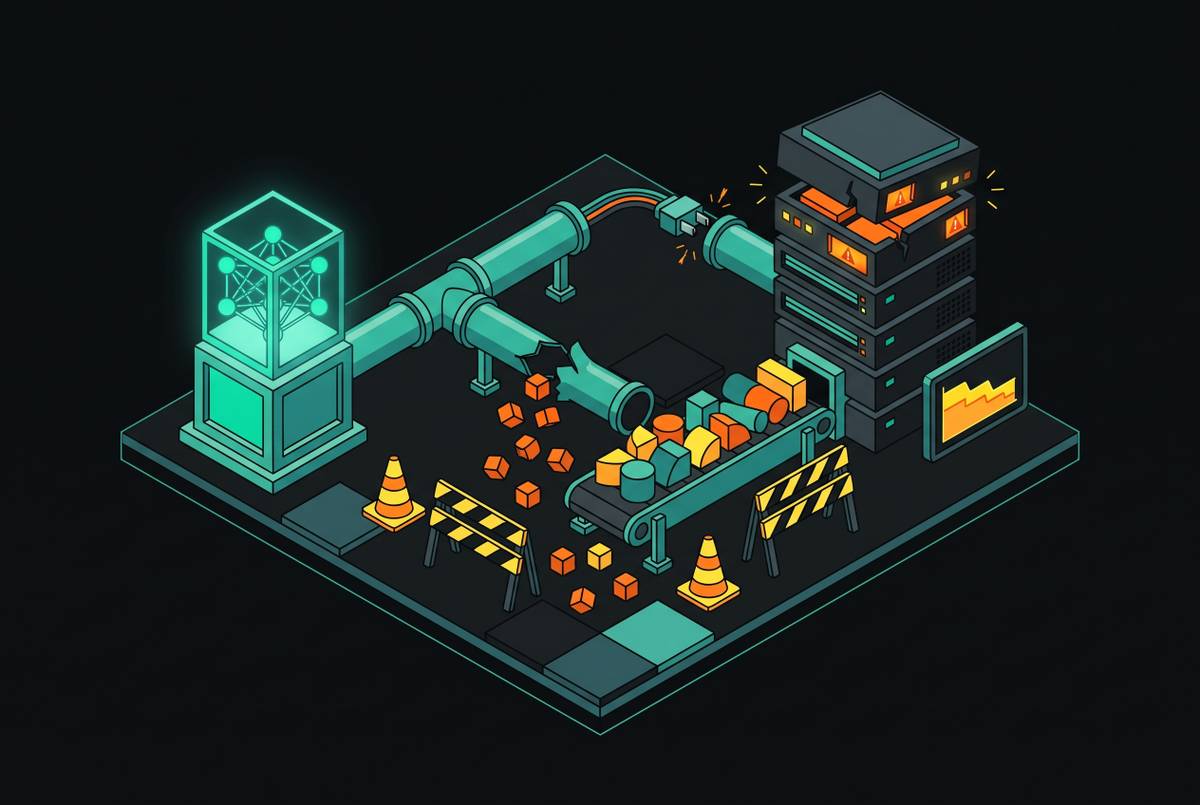
The model gets better, but the workflow still stalls. An agent gives a useful answer to a single question, then struggles to complete a task that spans several steps. It forgets relevant context when a new session begins or needs a person to keep prompting it toward the original goal. AI is deployed, yet the human still manages the work between its answers. That gap is the frustration behind model-first thinking.
The usual response is to invest in a newer or larger model, fine-tuning, or more careful prompts. These investments target the quality of the model’s response, so they make sense when the response itself is the weak point. But a workflow can fail even when its individual answers are good. If the system cannot keep an earlier result or recover from a failed tool call, better reasoning cannot fix that break in the workflow.
As a result, improvements in answer quality can become the new baseline without changing how much work people finish. Employees may receive better explanations while still supplying context, initiating each step, and restarting interrupted tasks. When productivity remains flat through those upgrades, what does that flatness actually indicate about the system surrounding the model?
What the orchestration layer is and what it actually does in an agent system
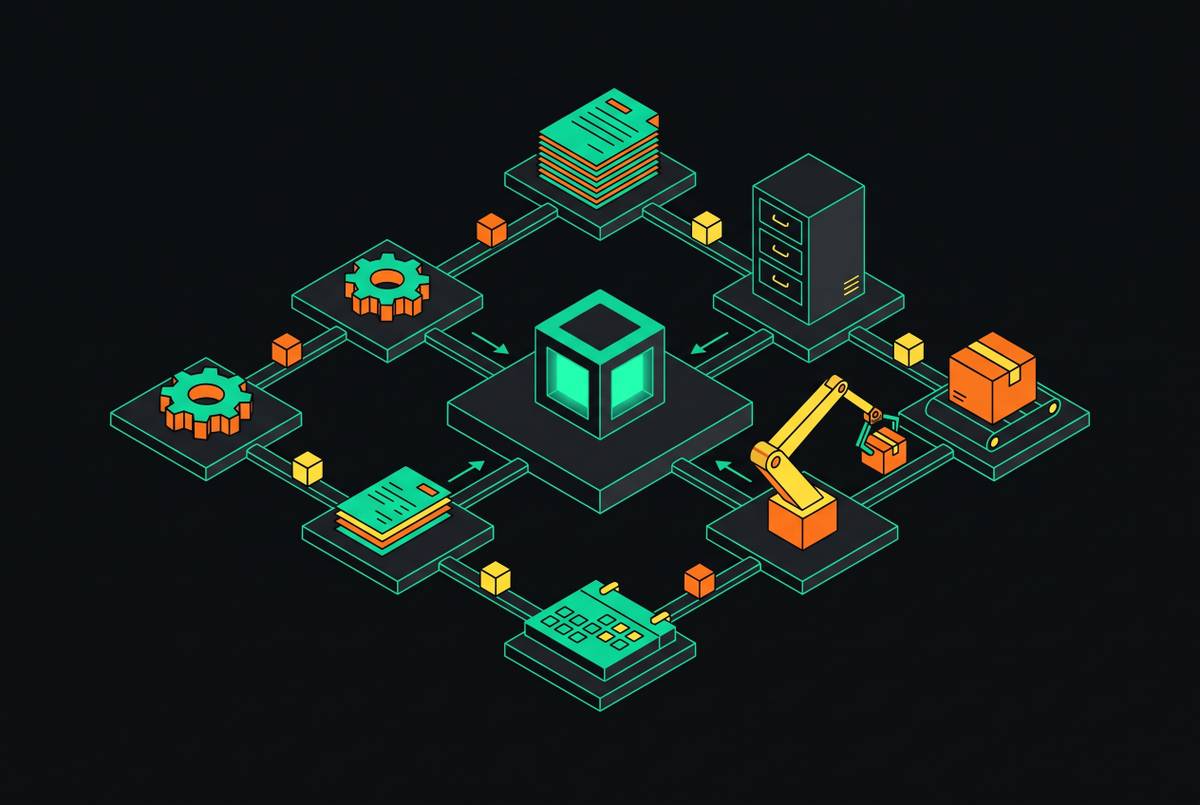
The orchestration layer is the software between a model and the work it is supposed to do. It turns separate model calls into a process that can retain context, use external systems, and continue toward a goal. The model supplies reasoning and generates responses. The surrounding layer determines what information reaches it, what actions are available, and how those actions fit together.
Routing decides which model, tool, or sub-agent handles a particular part of a task. Memory and context management keep the state that matters within a session, across sessions, and between agents. Tool invocation connects the process to APIs, databases, code runners, and search. Control flow joins those capabilities into executable work. It sequences steps, handles branches, retries failures, and escalates to people when needed.
Two further responsibilities distinguish an agent system from an interface that waits for questions. Scheduling and event triggers let work start without a new user prompt, while observability records what the agent did, the reasons recorded for it, and what happened as a result. These are not merely conveniences around the model. These capabilities let the system act proactively and let a developer diagnose what went wrong afterward.
An operating system offers a useful, limited analogy. Just as it manages resources and mediates an application’s access to its environment, orchestration manages the conditions under which an agent works. A model alone cannot remember yesterday’s session, run on a schedule, or coordinate with another agent on a shared task. Those abilities belong to the surrounding system. A faster processor does not, by itself, reorganize a workflow, and neither does a more capable model.
Why scaffold quality, not model quality, sets the ceiling on agent productivity
The clearest comparison holds the model constant and changes its scaffold. A thin scaffold may pass in a prompt and return an answer, leaving the user to supply missing history and decide what happens next. A stronger scaffold preserves relevant context, divides the task into executable steps, and coordinates their results. The reasoning capability is the same in both cases. What changes is how much of that capability the workflow can use.
Context provides a concrete example of this difference. A model may reason correctly from the information it gets but still give a confident, wrong answer because the scaffold left out something it needed. That failure can look like poor reasoning from the outside. Yet changing the model does not supply the missing input. The useful distinction is between a model that cannot reason through the available evidence and a system that never supplies the evidence it needs.
Dependencies make the same problem harder to spot. Suppose step 3 needs both the output of step 1 and context from a prior session. Each model call might be correct on its own, yet the task fails because those inputs never meet. The scaffold must preserve and surface both. Its quality therefore depends not just on storing information, but on making the right information available at the point of use.
A well-designed scaffold can handle partial failures without requiring a person to initiate the entire task again. It also defines and constrains tool calls, validates them before execution, and allows work to be interrupted, resumed, and audited without losing its place. Without them, people become the recovery mechanism every time execution breaks.
That does not mean more orchestration is always better. For procedural tasks, removing orchestration can improve reliability, so scaffold quality cannot be measured by how many layers a system contains. The architecture needs to support the work’s actual dependencies. For long-running, context-dependent tasks, a better architecture can let the model use more of the capability it already has before an upgrade adds more.
Where orchestration produces measurable gains across knowledge work workflows
Incident investigation needs to link the evidence as well as explain an error. An agent that gathers logs, correlates events, consults a runbook, and produces a prioritized hypothesis performs a different kind of job from one that answers an isolated question. The scaffold preserves the investigation as it develops. It also supports a handoff to a person with a structured summary, rather than leaving that person to reconstruct separate exchanges.
Code review has a similar dependence on history. An agent reading only a diff has a narrower view than one whose scaffold supplies the codebase’s history, the team’s conventions, and the downstream dependencies of a change. The agent that reviewed last week’s PR may have relevant context for this week’s, provided the surrounding system retains it and makes it available.
Data analysis adds sequencing and recovery to the picture. A workflow that queries, transforms, visualizes, narrates, and distributes results needs each step to receive usable output from the last. An unexpected schema can interrupt that chain. If the scaffold can recover, the analysis continues, otherwise a person must restart it. Scheduling changes its usefulness further, because a prepared analysis delivered every Monday morning does not depend on someone remembering to request it.
Reading from a CRM, writing to a ticketing system, and notifying people through messaging must form one coherent task rather than three unrelated, human-triggered events. The same structural need extends beyond engineering. Finance, legal, HR, and operations also have work with several steps whose meaning depends on context. Across these categories, the useful comparison is completed workflow versus isolated response, which makes the design of the underlying infrastructure the next question.
What AI platforms should a company use for workflow automation?
The structural choice is between infrastructure designed for agents and general-purpose tooling adapted to host them. Both can provide a place to run software. How much agent behavior the infrastructure supports directly varies, as does how much developers must build around it. For long-running tasks, that distinction affects reliability, debuggability, and continuity across sessions. A platform’s suitability therefore depends on its execution model.
Stateless serverless compute illustrates the trade-off without making general-purpose tooling inherently unsuitable. An agent in a stateless environment needs more engineering work to keep its session state. Service-oriented logging can present a similar mismatch. It may record what a service did without capturing the agent’s recorded reasoning steps well enough to explain the course of a task. Developers then build memory layers, retry logic, and additional observability before they can focus on the agent’s actual capabilities.
Infrastructure built for agents has those functions built into the platform. Persistent context storage remains accessible across sessions, while scheduling and event triggers let agents initiate work proactively. Tool invocation integrates validation, rate limiting, and rollback. Structured audit trails record reasoning steps as well as input and output pairs. The runtime accommodates work that is long-running, potentially asynchronous, and accumulating context instead of assuming every task fits a web service’s request-and-response pattern.
A developer-first agent operating system that can be installed and run with a single curl command illustrates how this design can remain accessible to technical teams. An easy setup lets them test the infrastructure before they commit to a long migration. Ease of installation is not the same as suitability for a business without a technical team, however. A curl-installable runtime is a developer entry point.
How teams should audit their current orchestration stack before the next model upgrade
For multi-step, context-dependent work, teams should first ask whether the agent starts over in ways a human worker would not. Does it lose information between sessions even though the task still needs it? If so, memory and persistence need attention. A model upgrade does not directly redesign the architecture that decides what survives.
The next question concerns what happens when execution breaks. Does a failed tool call lead to recovery, a stalled task, or a request for a person to restart everything? Brittle behavior points to under-specified control flow and recovery logic. Teams should also ask whether agents can begin work on a schedule or in response to an event. If every task needs a fresh prompt, scheduling and event triggering are not first-class parts of the system.
Teams need to test auditability too, because a good output alone does not show how the system works. Can a developer trace what the agent did, and the recorded reasons for it, step by step after the fact? If not, observability may be set up to track service activity. The engineering burden is another revealing signal. Time spent building memory layers, retry logic, and context management exposes infrastructure work that the platform is not providing.
These answers should determine the order of investment. Teams should fix the orchestration bottleneck first, then upgrade the model where greater capability can be used. They should also be able to test a new infrastructure layer quickly rather than undertake a long migration before learning whether it addresses the problem. Investment should hinge on whether the current system lets a capable model finish the work.
Sources
- A Contract-Centered Architecture for Scalable and Manageable Agentic Runtimes
- AgentKernel: The Trust-Native Agentic Operating System
- The Agent Operating System (AOS): A Reference Operating Architecture for Distributed Agentic Systems
- The Agentic Company OS: Substrate Inversion for Sustained Enterprise Agent Deployment
- Agent libOS: A Runtime Substrate for Capability-Controlled Self-Evolving LLM Agents
- Context Kubernetes: Declarative Orchestration of Enterprise Knowledge for Agentic AI Systems
- Infrastructure for the Agentic Web: Gap Analysis and Architecture from the Agentverse Platform