Prompt-Driven Agent Stacks Small Businesses Can Run Without Engineering Headcount
Small businesses can run multi-step AI workflows without hiring engineers or developers.
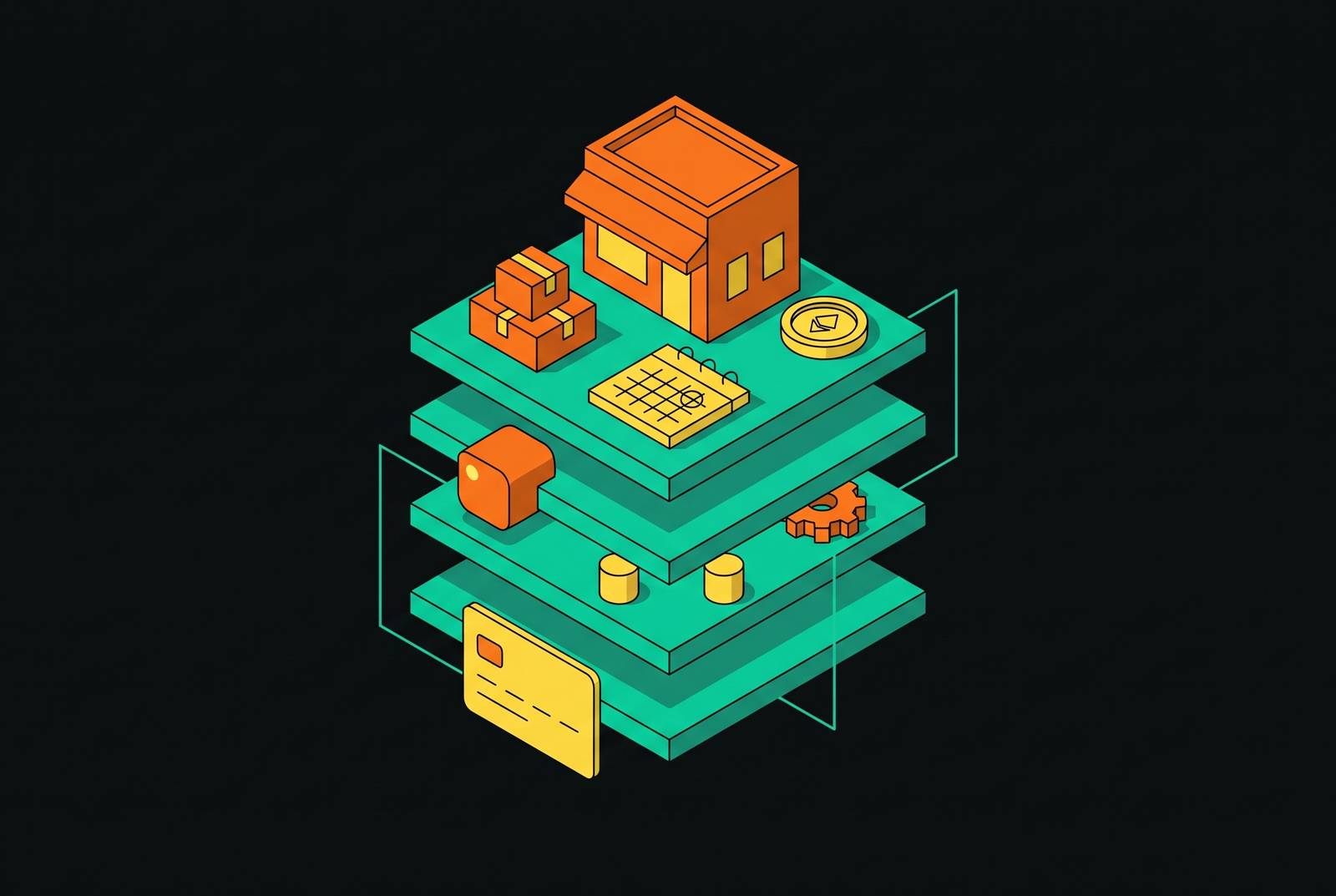
Small businesses can run multi-step business AI workflows without engineering headcount by combining a no-code interface, MCP tool connections, and persistent memory. The key is to prove one bounded workflow. That workflow becomes production-ready when it has durable context, traceable actions, and human approval where mistakes could reach customers.
Why small businesses are running out of runway with static automation
An invoice comes in a non-standard format, and the automation that usually routes it cannot finish the job. An inquiry uses unfamiliar wording, and a keyword-triggered chatbot misses the request. The exception lands back on the owner’s desk. These are not simply missing rules. They expose the limit of systems that execute predefined steps but cannot judge what to do when the input changes.
Traditional automation, including tools that automate repetitive tasks, webhook integrations, and rule-based chatbots, works well when the path is predictable. Adding more branches can cover more cases, but the owner still absorbs whatever falls outside them. Hiring developers to build custom agent tooling is not a practical answer for many small businesses facing cash-flow volatility and hiring friction. The infrastructure has changed instead. A non-engineer can now assemble tools that interpret a goal, consult live business data, and complete several steps without handing every ambiguity back to a person.
What a prompt-driven agent stack actually is, and what it is not
A prompt-driven agent stack is a set of connected layers that lets a system understand an objective, assess its environment, and act across multiple steps. It is not simply a better chatbot. A basic generative chat tool waits for a prompt, gives a response, and stops. An agent can take a high-level goal, query live records, choose a route, and do the work without someone stepping in at every step.
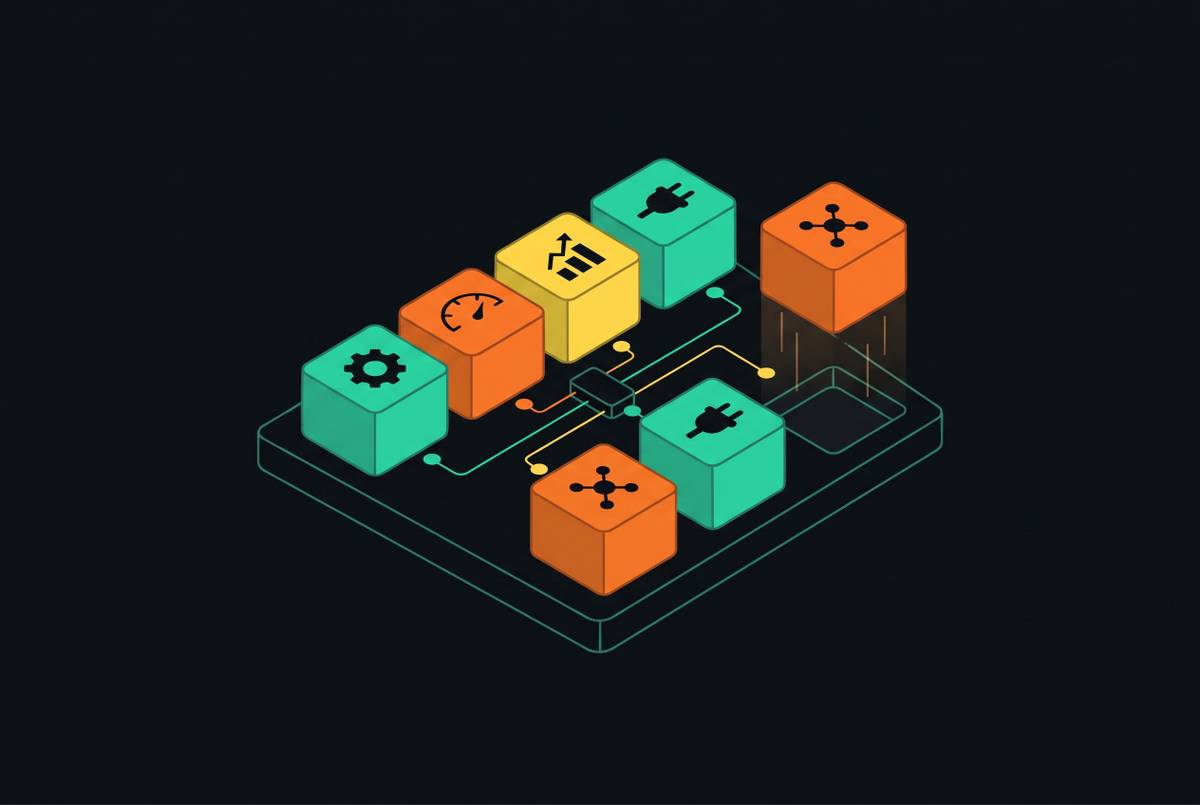
The distinction is how the next action gets chosen. Traditional automation follows a programmed path, while an agent uses a large language model to work out what is wanted, weigh the options, and decide what comes next. That makes unfamiliar inputs manageable. It does not make the model self-sufficient. For the agent to work on its own, this architecture needs three layers: a natural-language interface for instructions, MCP to connect to tools, and persistent memory to keep context between runs.
Layer 1: What AI tools should a small business use to automate operations?
The no-code builder turns an operator’s instructions into agent configuration and workflow logic. It puts model selection, integrations, and deployment behind prompts or visual controls. The choice starts with three questions. Who is the agent talking to, who will maintain it in six months, and who owns the runtime? Customer support, internal assistance, and cross-app automation need different tools, and the time a team has for upkeep and its data-residency requirements can rule out choices before it looks at price.
A team with nobody technical needs a fully hosted, low-maintenance service, while a technical marketer can handle more configuration. Self-hosting gives a team control over its infrastructure but changes the work needed to maintain it. The shortlist is therefore a decision aid. Zapier Agents is a fit for connecting apps a team already uses, FwdSlash is built for website agents that talk to customers, and MindStudio is a fit for internal assistants. Tidio focuses on support chat for small businesses, while another vendor lets a team quickly set up a document-trained bot.
The August 2026 prices in the brief put Zapier Agents at $19.99/mo, FwdSlash at $20/mo, and MindStudio at $20/mo plus model usage cost. Their allowances are not interchangeable. Zapier counts activities such as app interactions and knowledge lookups separately from its Zap task billing, while FwdSlash uses a monthly message allowance that does not change with model choice. MindStudio’s paid offering has no limit on the number of agents or runs. Tidio meters conversations, Lyro AI, and Flows separately, while the document-trained bot vendor uses credits, with premium models spending several per reply.
All five offer free entry options and are hosted only. MindStudio’s free plan allows 1 agent and 1,000 runs. A useful comparison therefore prices the actual workflow rather than the subscription alone, because messages, activities, runs, and credits measure different things. MCP support is another filter, as a builder without it can bring custom integration work back into scope. Seeing the agent’s reasoning steps in the test panel also helps with debugging, especially before giving it write access, though a tool-level action log is still needed.
Recommendations for other agent builders deserve the same scrutiny. Their appearance in a comparison is not enough to establish that either fits a team without technical maintenance capacity. The questions above remain the test. The brief supplies no platform-specific basis for ruling either out, so the defensible choice rests on supported capabilities.
Layer 2: MCP as the integration layer that eliminates the engineering tax
An account question in Slack once meant opening Salesforce, finding the contact, checking activity, and copying notes back into the thread. That is manual integration work. With an MCP-connected agent, the request can return the account owner, tier, open renewals, and last touchpoint inside Slack in seconds.
Anthropic introduced MCP as an open standard for connecting agents to external tools and data through a consistent interface. Instead of bespoke integration code for each service, an agent connects to an MCP server and calls the tools that server exposes. The ecosystem now includes over a thousand servers. MCP has roughly 97 million SDK downloads per month and is governed by the Linux Foundation with backing from major AI vendors. Those facts give a lean team a broader foundation than a one-off connector.
Slack made its MCP implementation generally available on February 17, 2026, so teams could use a collaboration tool they already had as an agent interface. The same connection pattern can serve a web interface or local CLI agent. Surface choice need not dictate separate plumbing. For a lean operator, server selection comes down to coverage of existing tools, visual configuration in the builder, and whether the vendor or a third party maintains the server. Each tool call also provides a boundary for logging and attribution, although the deployment must actually capture those records.
Layer 3: Persistent memory and why most deployments underengineer it
A lead qualifies on Monday, then receives the same qualification questions on Wednesday. The first run may have worked perfectly. The next run did not retrieve what happened before. Memory is not an automatic property of the model, and leaving it unspecified is a common reason an apparently capable agent behaves like an expensive chatbot.
The architecture needs two kinds of memory. The context window holds recent exchanges, notes on the work at hand, and a few retrieved records that bear on it. That working memory is temporary. Durable state belongs in a CRM, structured data store, or vector database that can still be used between sessions. The retrieval process should bring back the five to ten prior interactions that matter most to the task and leave the rest of the history out of the context window.
For a lean team, the minimum is straightforward. After each session, the agent writes its outputs to a CRM or structured store, then retrieves the relevant record on the next run. An MCP connection can make that context available across Slack, a web interface, and a CLI workflow. More elaborate runtimes can manage the boundary between active and stored context directly. Letta offers that approach, but its memory management is part of its runtime, making it better suited to adopting a new agent architecture than attaching it to an existing one.
Practical workflow recipes that show the three-layer stack working end-to-end
An incoming inquiry is a useful first scenario because the work extends beyond writing a reply. The agent checks for an existing CRM contact, scores the lead against qualification criteria, drafts a personalized response, and updates the record. The criteria live in plain-language instructions. MCP provides access to the inquiry and CRM, while the stored record supplies prior context and preserves the new result. The workflow can keep going until it reaches a set threshold where a person must step in, and anything sent outside the business needs approval.
An operational alert brings a different problem, because someone often has to gather the evidence before an investigation can start. AWS’s DevOps Agent workflow demonstrated autonomous detection and diagnosis in minutes, followed by a root cause analysis and mitigation recommendations posted to Slack. Western Governors University’s SRE team reduced total resolution time from an estimated two hours to 28 minutes using the same agent. In the three-layer pattern, the builder handles the trigger and posting, MCP connects monitoring and communication tools, and memory stores prior incident patterns.
The recommended starting scope is deliberately narrow. One alert source and one system, such as PagerDuty plus one Kubernetes cluster, limits the reach of early misconfiguration. This is investigation before broad operational control. The agent can gather evidence and suggest mitigation without being allowed to change every system it looks at.
Content operations starts with a topic. An agent researches specified sources, drafts in a defined brand voice, formats for different channels, and queues publishing. NoimosAI handles the steps from research to scheduling, while Jasper AI has tools to govern brand voice and templates for enterprise marketing. Research, drafting, and formatting can proceed autonomously, but customer-facing publication needs human approval.
Code-related workflows add another recordkeeping requirement. A commit trailer or PR field should identify whether a change was AI-assisted and at what level, including autocomplete, generated block, or agent-authored work. Otherwise, linking agent involvement to code quality becomes impossible. This provenance record complements the action log.
Where the agent stack breaks and what governance a lean team actually needs
Amazon’s March 2026 public blog post identified a failure in which an engineer acted on inaccurate advice inferred by an agent from an outdated internal wiki. Bad context caused the failure even though the generated code was correct. That distinction is important for memory design. Persisting information gives an agent continuity, but it does not establish that the information remains correct.
Write access makes such errors more consequential. A mature action trace records each tool call, its input arguments, output payload, timestamp, and attribution boundary. A completion message is not enough. High-level status logs may show that a task finished without allowing anyone to reconstruct the action path. Reasoning visibility in a builder can help explain behavior, but the operational record must show what the agent actually did.
The minimum safeguards belong in the systems the agent reaches. Credentials should give each connection only the permissions it needs, and network rules should block access outside the set scope. Approval gates must cover customer-facing changes and external communications. Logs need tool calls, inputs, outputs, and timestamps, with a defined weekly review process until behavior is well-characterized. These controls cannot depend only on instructions the agent is expected to follow.
The workable resolution is a permission-tier model. Routine research, drafting, formatting, and internal notifications can run autonomously, while sensitive data changes and customer-facing deliverables require human approval. The boundary makes useful autonomy possible. It concentrates human attention on consequential actions rather than forcing someone to supervise every low-stakes step.
How to assemble the stack and where to start without overbuilding
Work begins with one workflow with a clear, measurable output, such as lead qualification responses, weekly standup summaries, or support ticket triage. Its result should be visible and time-bound. The operator then chooses a builder by audience, maintenance capacity, and runtime ownership before comparing price or features. MCP support should be confirmed before configuring connections, so the first successful workflow does not depend on integration work the team cannot maintain.
Memory belongs in that first design, even if it is only a CRM field written after every run and retrieved before the next. Permissions come before write access. The recommended progression is read-only operation first, internal writes second, and customer-facing writes only after the action log shows consistent, expected behavior.
Production-ready means one workflow running reliably with logs, permission tiers, and an approval step in place. From there, another MCP connection can make more tools reachable, while accumulated memory can give later runs more relevant context. Expansion follows evidence rather than ambition, allowing a small team to reuse the infrastructure it has already learned to govern.