AI Assistant Runtime Behavior That Determines Real Day-to-Day Business Utility
Business value depends on runtime, not just model quality.
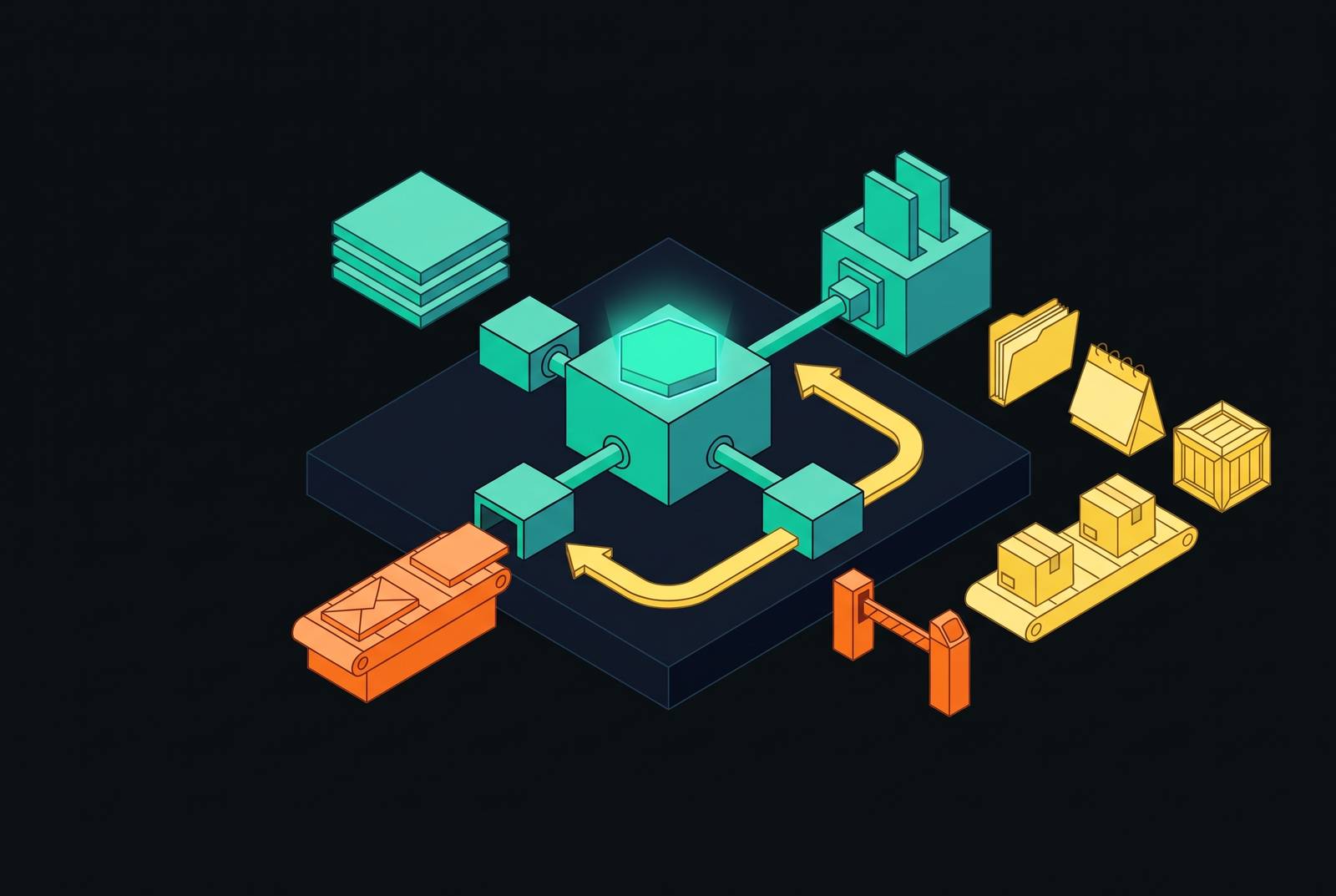
Business AI assistants help with day-to-day work when their runtime can start work, remember context, use business systems, and coordinate tasks with clear permissions. Model quality alone cannot provide those capabilities. Companies choosing tools to automate operations should shortlist platforms that show they can do these things, since convincing answers alone are not enough.
Why model quality alone does not determine whether an AI assistant delivers real business value
Teams often start by comparing the models in AI assistants, but their value in production depends on what happens after the model answers. Can the system move a file, initiate a workflow, or carry a budget decision through the required approval process? Even a capable model in a stateless, reactive wrapper needs a person to give it context and prompt it at each next step.
Vendors can apply the word “agent” to chatbots or linear automation scripts without changing how those systems work. A system that only answers explicit prompts and forgets between sessions remains a text generator, even if its answers are excellent. The stronger test is whether it can break a goal into tasks, handle unexpected errors, and execute a multi-step workflow without following only a scripted path. Those capabilities depend on the environment around the model.
What a runtime layer actually does that a model API cannot do on its own
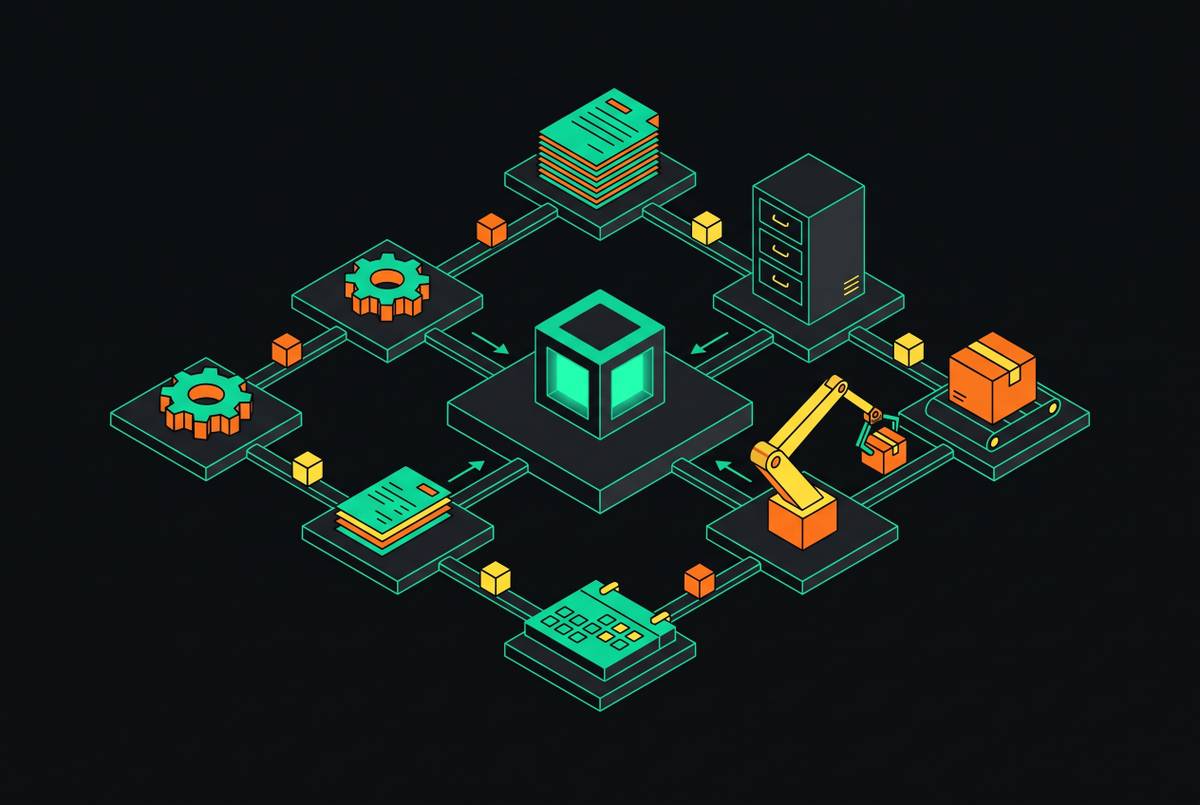
An agent runtime is the software infrastructure that manages the full lifecycle of autonomous agent operation. A model API receives a prompt and returns a completion. The runtime manages the work between those completions, including scheduling, memory, tool access, governance, and observability. It determines what the agent remembers, which systems it can reach, when it acts next, and which actions need approval. The distinction is between reasoning and managing execution.
For developers, an operating system provides a useful analogy. An OS supplies process scheduling, memory management, input and output access, and security controls so that each application does not have to rebuild them. An agent runtime gives agents similar services so they can keep working across sessions and when they use external systems. The model handles reasoning and relies on those services to do useful work.
Standard interfaces help connect that environment to the outside world. Anthropic’s Model Context Protocol, or MCP, standardizes connections between AI applications and external tools, databases, and workflows. Google’s Agent-to-Agent protocol, or A2A, handles agent discovery and task delegation between agents. MCP connects an agent to tools, while A2A connects it to other agents that can take responsibility for part of the work.
Scheduling and proactive triggering distinguish an assistant that waits from one that acts
A reactive assistant needs someone to start each task. That can be useful for discrete requests, but it leaves a human responsible for noticing when work needs doing. Proactive triggering changes who initiates the operation. An agent can act on a schedule, an external event, or a detected condition. Nightly reconciliation and a response to an arriving ticket therefore belong to a different operating pattern from answering a question about them.
AT&T’s network-based digital receptionist illustrates that distinction. It engages unknown callers in real time to identify spam and fraud before the call reaches the customer. It can disconnect suspicious interactions or take messages. The incoming call itself supplies the trigger. A human does not have to ask the system to examine each caller before it acts.
Walmart provides a contrast in autonomy. Its employees use predictive artificial intelligence and machine learning models to help planners find chances to reposition inventory. Human planners remain in the loop. Evaluation needs to test whether AI detects a changing condition and whether the system can initiate the appropriate work when that condition occurs.
Persistent memory and context explain why agents that forget start over every time
An agent can start work proactively and still repeat yesterday’s mistakes if it cannot retain context. Triggering tells it when to act, while memory helps it choose what to do. A system managing a vendor relationship, an ongoing incident, or a customer account needs access to prior decisions and unresolved work. Otherwise, each session becomes another first contact.
Three kinds of long-term memory serve different purposes. Episodic memory keeps a record of what happened in earlier interactions, while semantic memory holds the domain knowledge and facts the agent can use. Procedural memory represents how to perform tasks the agent has learned or been configured to follow. Remembering that a customer issue was resolved is different from knowing the relevant policy or the process for handling the next issue.
In a stateful graph architecture, checkpoints write execution state to durable storage at each step, supporting resumption after interruption, debugging through replay, and context handoffs. When a planner delegates to a specialist, shared context must survive the boundary between them. Long-running reasoning also consumes tokens, so context optimization and semantic routing become runtime cost-management practices shared across workflows.
Tool orchestration turns reasoning into transactions across real business systems
Memory gives an agent continuity, but tool access gives it reach. An assistant that can explain a customer record without updating the relevant system still leaves the transaction to someone else. Tool orchestration is the managed, auditable connection between reasoning and external APIs, databases, and enterprise software. Through it, agents can divide business goals into tasks and select tools for individual steps.
MCP provides a consistent interface for discovering and invoking those tools. An agent can reach document retrieval, code execution, or a database through the same protocol layer instead of requiring a separate integration approach for each connection. Access alone is not enough, however. Closed feedback loops let an agent spot invalid API responses or malformed data and try another way to carry out the work. Without that recovery behavior, a tool-connected assistant can still stop at the first unexpected response.
Google Cloud’s AES case study describes how agents and a human share AES Corporation’s energy safety audit workload, with agents handling half and a human examining half. Slack’s incident response system shows a different application. Its engineers built custom MCP tools integrated into Cursor to turn an alert into an investigation, surfacing logs, identifying suspect commits, mapping blast radius, and drafting communications. The system saves the team hours each week.
Those capabilities make permissions part of orchestration itself. Once an agent can write to production systems, the runtime needs to distinguish permitted actions from those requiring approval. Bounded autonomy provides a practical pattern. Read operations can have full autonomy and low-risk writes can have conditional autonomy, while high-stakes actions such as financial transactions or external communications must have human approval. Drafting a communication and sending it are different permissions, even when they belong to the same workflow.
Multi-agent orchestration addresses the limits of one reasoning loop
Tool access expands what an agent can do, but it does not make one reasoning loop suitable for every complex workflow. High-value work can call for different specialties and tools, each with its own context. A planning agent can share that work among specialists. A researcher gathers information, a coder implements a solution, and an analyst validates the result. Their coordination becomes a runtime responsibility.
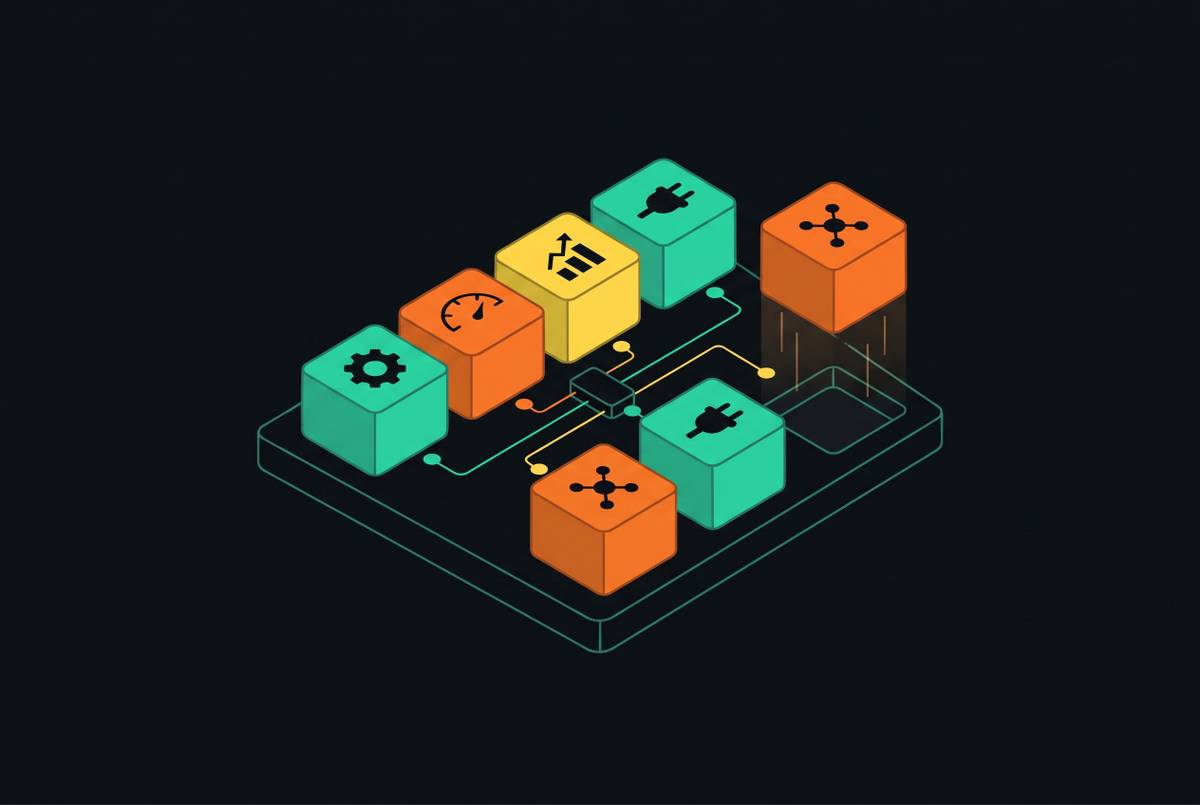
This is the agent stack’s microservices moment. Just as distributed services split up work that used to sit in one application, specialist agents share work that an all-purpose agent would otherwise have to do alone. An orchestrator decomposes the goal, sequences tasks, handles failures, and combines results. A2A supports discovery and delegation at this level, while specialists use MCP to reach their tools. These interfaces help connect the parts, but the runtime must still manage the whole execution.
Goldman Sachs is building agents with Anthropic for trade and transaction accounting, client due diligence, and onboarding. Such workflows involve reading documents, applying domain logic, cross-referencing data, and routing decisions. They fit the case for specialized work, though the example alone does not establish a particular multi-agent architecture. Communication, shared state, conflict resolution, and orchestration across agents are distributed systems problems.
Why the agent stack needs purpose-built infrastructure rather than cloud tooling assembled after the fact
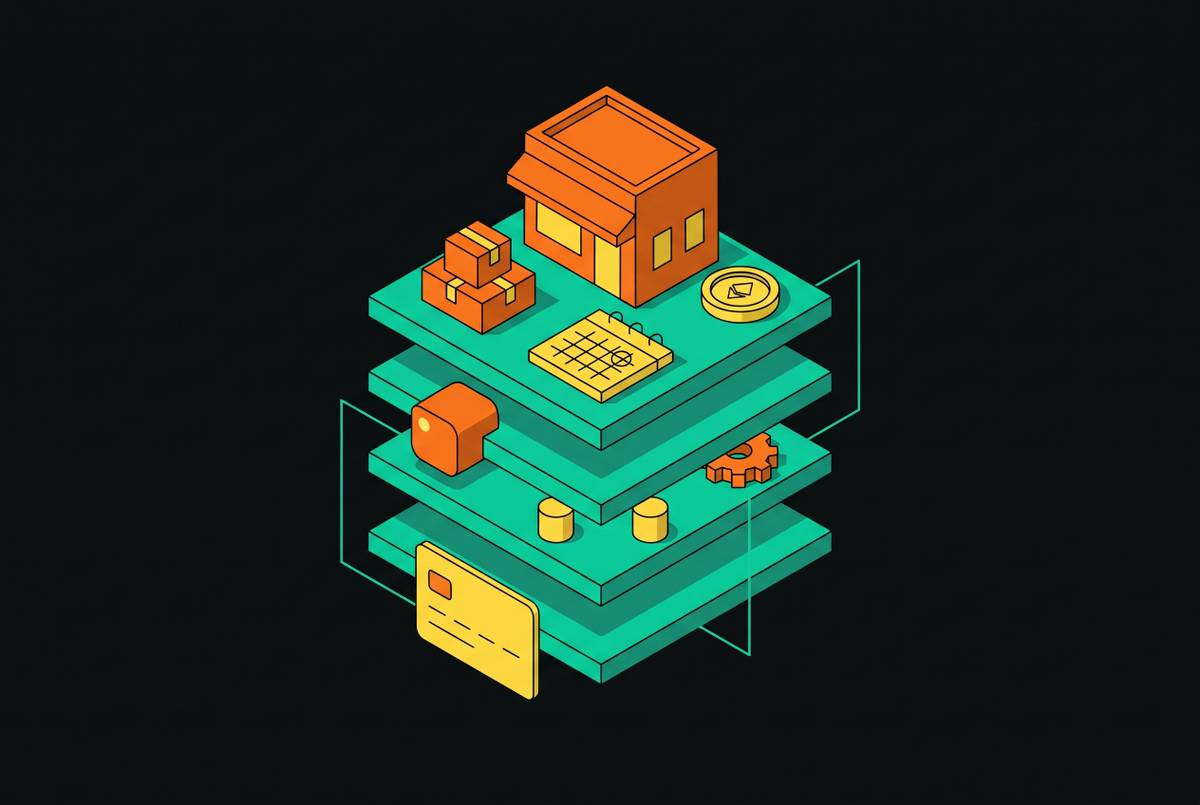
These runtime behaviors depend on one another in production. A scheduled task needs the right context, tool execution needs permissions, and delegation needs state that passes from one agent to another. Treating each as a separate feature leaves the connections to the developer. That is where fragmentation begins. Memory in one service and scheduling in another do not, by themselves, provide a coherent execution environment with governance across the full workflow.
General-purpose cloud components can supply underlying resources, but assembling them does not eliminate the agent-specific infrastructure work. Deterministic automation also serves a different purpose. RPA and linear rule-based pipelines execute prescribed paths, while agentic workloads require handling unstructured inputs, selecting tools dynamically, and recovering from unexpected errors. A fixed pipeline still needs more than a model call to work in those ways.
AIOS formalizes the operating-system analogy by describing a dedicated kernel that provides scheduling, context management, memory and storage management, and access control for runtime agents. The kernel is infrastructure around the model. This helps explain why even a system that works well in a demonstration can face a pilot-to-production chasm once it has to handle load, governance, and coordination. An agent operating system built for this work brings those duties together in one execution layer. Its value comes from managing their dependencies.
How should a company evaluate AI platforms for business workflow automation?
The practical evaluation should begin with runtime behavior rather than model rankings or a vendor’s feature list. Can an agent start on a schedule, an event, or a detected condition without a person initiating each run? The evaluation should also test whether it retains episodic, semantic, and procedural context across sessions through durable storage and checkpointing. A platform that leaves persistence to the developer for every workflow has transferred a core runtime obligation to the application team.
Does the platform have MCP-compatible tool access and closed-loop error recovery, along with tiered permissions that put approval gates on high-stakes actions? Can it coordinate specialists through A2A-compatible delegation, shared state, and observability across the execution graph? Governance belongs inside these tests. Audit trails, policy enforcement, and identity-aware access controls need to be runtime services in place before the agent can act, so the team does not have to add them later as integrations.
A developer-first platform installable with a single command can reduce the work needed to get an initial agent running, while weeks of configuration can burden subsequent deployments. Installation simplicity is not the same as no-code operation, however. For a small business without a technical team, a curl-installable runtime alone does not establish that the business can configure and operate the required workflows. The evaluation still needs to distinguish what the platform manages from what its users must build.
Finally, the system should demonstrate that it can decompose goals, handle dynamic errors, and complete multi-step work without relying only on scripted paths. That separates genuine agentic capability from agent washing. Purpose-built agent operating systems are the category this framework is designed to identify, but the label is not proof. The deciding evidence is whether scheduling, memory, tool execution, coordination, and permissions work together as an integrated runtime for the business task at hand.